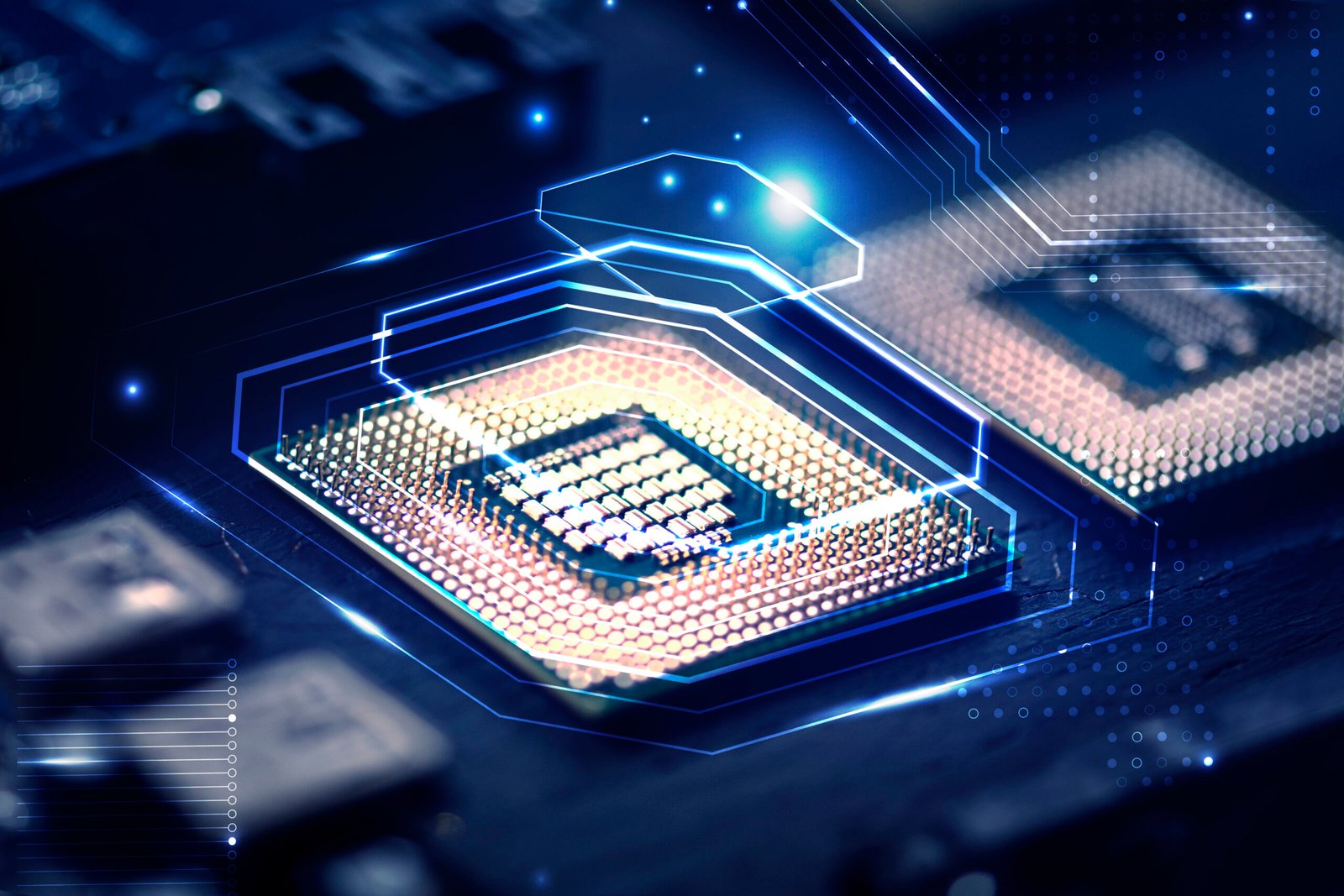
So, your school wants to dive into robotics, IoT, or smart devices, and someone drops the techy bomb:
“Should we use a microprocessor or a microcontroller?”
Cue the blank stares, a few panicked Googles, and one student confidently saying, “I think my toaster has a micro-whatever?”
Let’s clear it up. You’re about to witness the ultimate brainy showdown:
Microprocessor vs. Microcontroller — which one deserves a spot in your classroom’s hall of fame?
Round 1: Who Are These Tiny Tech Titans?

Intel curie
Microcontroller: The Single-Chip Wonder
The microcontroller is basically the Swiss Army knife of the tech world. It’s got a CPU, RAM, ROM, and I/O ports, all crammed into one itty-bitty chip. It’s made to do one job really well—like make a robot move or measure soil moisture without starting a fire.
Intel Curie microcontroller
Pros:
- Super affordable
- Great for beginners
- Low power, high hustle
- Perfect for IoT and embedded projects
Use it for:
Arduino Uno projects, smart irrigation sensors, line-following robots, and making an LED blink like it just heard a good joke.
Microprocessor: The Big Brain of Devices

A microprocessor, on the other hand, is like the overachiever in the computer chip family. It’s just a CPU, but boy, does it process. It needs external memory and peripherals, but once it’s all set up, it can do serious computing.
Pros:
- Handles complex tasks like AI, image processing, or running Linux
Intel Core i3-2100 Processor
- Multitasking like a boss
- Great for smart farming dashboards, robot vision, or streaming cat videos while coding (just kidding… kind of)
🛠 Use it for:
Raspberry Pi projects, facial recognition bots, real-time IoT dashboards, and hacking together a digital weather station for your science fair.
Round 2: What Should Schools Teach?
This is where it gets spicy !
Microcontroller for Schools?
- Great starting point
Arduino 101
- Teaches basic circuits and control logic
- Ideal for younger students or beginners
- Helps understand the core idea of “if this, then that” logic (and not just in memes)
Best microcontrollers for school projects?
Arduino Uno, ESP32, Seeeduino, BBC micro:bit — all fun, friendly, and practically indestructible (unless thrown during a coding meltdown).
Microprocessor for Schools?
- Prepares students for real-world software and hardware integration
- Perfect for older students doing advanced robotics, AI, or networked IoT
- Great for data analysis, Python programming, and running full operating systems
Best microprocessors for school learning?
Raspberry Pi 4, Jetson Nano, BeagleBone Black — because your STEM kids deserve more than just blinking LEDs.
Round 3: What’s the Real Difference?
| Feature | Microcontroller | Microprocessor |
| Components | All-in-one: CPU, memory, I/O | Just CPU – needs external memory & I/O |
| Power Use | Low (like, really low) | Moderate to high |
| Complexity | Simple and direct | Complex, but powerful |
| Tasks | One job at a time | Multitasking legend |
| Examples in School | Arduino, ESP32 | Raspberry Pi, Jetson Nano |
| Real-World Comparison | Your washing machine’s brain | Your laptop’s cousin |
Who Wins?
Microcontrollers are like your reliable lab partner. They get things done, don’t ask for much, and teach foundational skills like wiring, logic, and basic coding.
Microprocessors are like the school valedictorian who also plays drums in a band—powerful, multitasking, and slightly intimidating (but in a cool way).
Teach both if you can.
Start with microcontrollers to build core skills, then level up to microprocessors for advanced, project-based learning.
Bonus: STEM Powers Activated
Here’s what students learn by using microcontrollers and microprocessors:
- Engineering: Circuits, prototyping, soldering (with minimal finger burns)
- Coding: Python, C++, Scratch, even a bit of JavaScript
- IoT Concepts: Connectivity, sensors, data visualization
- Real-World Impact: Smart irrigation, sustainable tech, robotics that doesn’t destroy the planet
Conclusion: Let’s Get Nerdy!
Whether your students are blinking LEDs or building a robot army (peaceful, we hope), teaching microcontrollers and microprocessors opens up an entire galaxy of creativity, logic, and innovation.
So next time someone asks:
“Microcontroller or microprocessor?”
You can confidently say:
“Yes.”